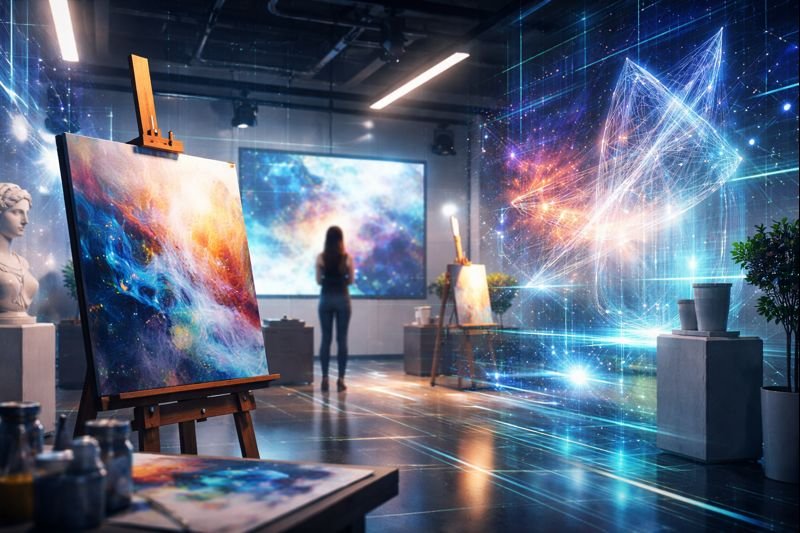

Art has always evolved alongside human progress. From cave paintings made with primitive tools to oil masterpieces shaped by Renaissance science, creative expression reflects the technology of its time. In the 21st century, this relationship has intensified. Digital tools, artificial intelligence, and immersive technologies are no longer just supporting art—they are redefining what art is.
The influence of technology on modern art reaches far beyond aesthetics. It has transformed how art is created, experienced, shared, and even valued. This shift is not a trend; it’s a fundamental change in the artistic landscape.
Technology as a Creative Partner, Not Just a Tool
Modern artists no longer rely solely on brushes, chisels, or cameras. Software, algorithms, and machines now participate in the creative process itself.
Digital painting platforms allow artists to experiment without material limits. Mistakes can be undone instantly, styles can be layered endlessly, and entire worlds can be created on a single screen. This freedom has encouraged experimentation on a scale that traditional media rarely allowed.
More importantly, technology has blurred the line between artist and tool. When an artist uses generative software or AI-driven systems, the outcome is shaped by both human intention and machine interpretation. The result is a new kind of collaboration—one where creativity is shared between mind and code.
The Rise of Digital and New Media Art
Digital art is no longer a niche. It has become a dominant force in modern galleries, museums, and online platforms.
Video art, 3D installations, projection mapping, and interactive exhibits have expanded how audiences engage with creative work. Instead of standing back and observing, viewers often become part of the artwork itself—triggering visuals, sounds, or changes through movement and touch.
This shift has changed the role of the audience. Art is no longer passive. It responds, evolves, and sometimes even learns from those who experience it.
Artificial Intelligence and Algorithmic Expression
One of the most debated aspects of technology’s influence on modern art is artificial intelligence.
AI systems can now analyze thousands of artworks, learn patterns, and generate original images, music, and even poetry. While some critics question whether machine-generated art can be considered “authentic,” many artists see AI as a powerful extension of creative thinking.
Rather than replacing artists, AI often serves as a catalyst. Artists define the rules, curate the data, and make aesthetic decisions. The machine introduces unpredictability—an element that has always been central to artistic discovery.
This collaboration challenges long-standing ideas about authorship and originality, forcing the art world to reconsider what creativity truly means.
Social Media and the Democratization of Art
Technology has also changed who gets to be seen.
Before the digital era, artists depended heavily on galleries, critics, and institutions for exposure. Today, social media platforms allow creators to share their work directly with a global audience. A digital illustration, short video, or experimental piece can reach millions within hours.
This accessibility has diversified modern art. Voices from different cultures, backgrounds, and disciplines are now visible in ways that were previously impossible. While online algorithms influence visibility, the barriers to entry are far lower than ever before.
At the same time, this constant exposure has influenced artistic styles. Many modern artworks are created with digital screens in mind—bold visuals, striking colors, and concepts that communicate quickly in fast-scrolling environments.
Virtual Reality and Immersive Experiences
Modern art now has entirely new aspects thanks to virtual reality (VR) and augmented reality (AR).
Artists can now create spaces that viewers step inside rather than observe. These immersive environments challenge traditional ideas of scale, perspective, and narrative. A VR artwork might surround the viewer with sound, motion, and visuals that shift in response to where they look or how they move.
This form of art is not confined to physical locations. A virtual exhibition can be accessed from anywhere in the world, redefining the concept of galleries and museums.
Technology’s Impact on Art Markets and Ownership
The way art is bought, sold, and owned has also changed dramatically.
Digital platforms have made art more accessible to collectors, while blockchain technology has introduced new models of ownership and authenticity. Digital works, once considered easy to copy and difficult to value, can now be verified and collected in ways that mirror traditional art markets.
This shift has opened financial opportunities for digital artists while sparking debates about value, permanence, and sustainability in modern art economies.
Challenges and Ethical Questions
Despite its benefits, the influence of technology on modern art raises important concerns.
There are questions about creative ownership, especially when algorithms are trained on existing artworks. There is also the risk of over-reliance on technology, where tools begin to dictate aesthetics rather than support artistic vision.
Additionally, the rapid pace of innovation means that some digital artworks become obsolete as platforms and formats change. Preserving modern art in a technological age is an ongoing challenge for artists and institutions alike. For both artists and organizations, maintaining modern art in the era of technology is a constant struggle.
The Future of Modern Art in a Technological World
Technology will not replace human creativity—but it will continue to reshape how creativity is expressed.
The future of modern art lies in balance. Artists who understand both traditional principles and emerging technologies are best positioned to create meaningful, lasting work. As tools evolve, the core of art remains the same: the desire to communicate ideas, emotions, and perspectives.
The influence of technology on modern art is ultimately a story of expansion. It has expanded creative possibilities, expanded audiences, and expanded the definition of what art can be.
Final Thoughts
Physical materials, geographic boundaries, or established institutions no longer confine modern art. Technology has unlocked new forms of expression that were unimaginable just decades ago.
As innovation continues, art will keep evolving—not away from humanity, but deeper into it. The most powerful modern artworks are those that use technology not as a shortcut, but as a bridge between imagination and experience.