
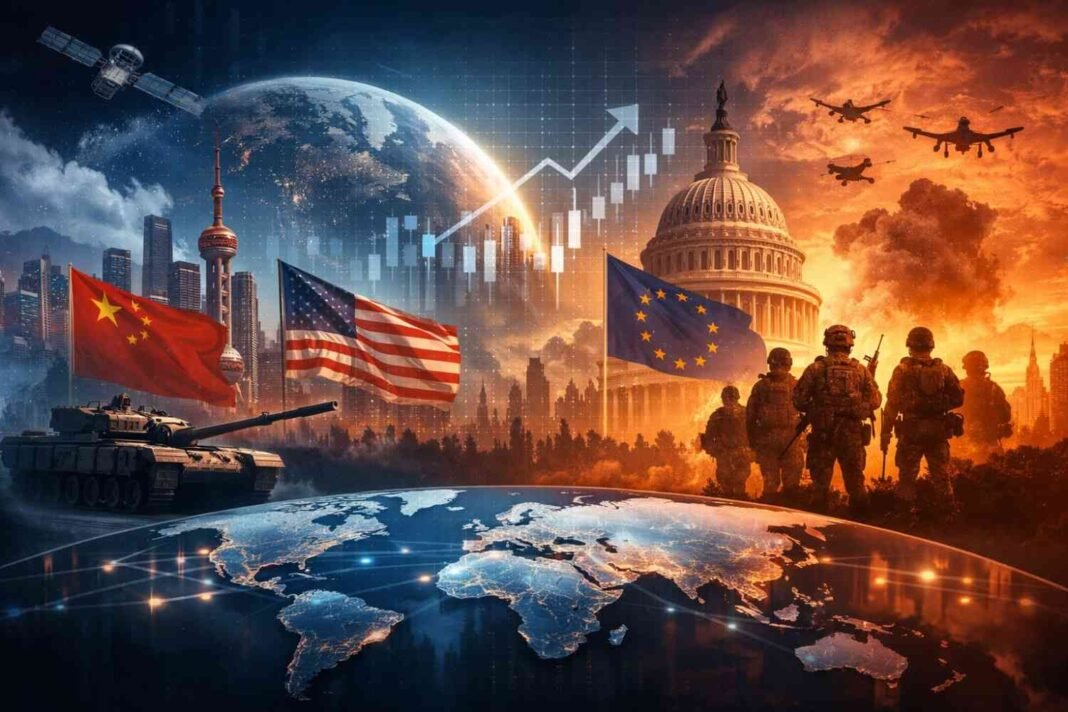

The global political landscape is entering a period of accelerated change. Power is shifting, alliances are being tested, and long-standing assumptions about governance, security, and economics are under pressure. From election cycles in major democracies to the growing influence of non-state actors, this year is shaping up to be one of the most consequential in recent memory.
Understanding the global political trends to watch this year is no longer just for policymakers or analysts. Businesses, investors, educators, and everyday citizens are increasingly affected by decisions made far beyond their national borders. What follows is a clear, in-depth look at the most important political trends redefining international relations and domestic governance around the world.
1. A Defining Year for Elections and Democratic Stability
This year stands out as one of the busiest election cycles globally. More than half of the world’s population will live in countries holding national or regional elections, placing unprecedented stress on democratic institutions.
Across many democracies, elections are no longer just about policy differences. They have become referendums on trust—trust in institutions, media, and the rule of law. Allegations of interference, misinformation campaigns, and declining voter confidence are forcing governments to rethink how elections are secured and communicated.
At the same time, voter turnout is becoming more polarized. While some populations are increasingly politically engaged, others are withdrawing altogether, convinced that electoral outcomes no longer reflect public will. How governments respond to this legitimacy gap will shape democratic resilience for years to come.
2. The Rise of Multipolar Power Dynamics
One of the most significant global political trends to watch this year is the acceleration toward a multipolar world. The era of clear, unchallenged global leadership is fading, replaced by a complex web of regional powers asserting influence.
Countries such as China, India, Turkey, Brazil, and Saudi Arabia are expanding their diplomatic, economic, and military footprints. Rather than aligning strictly with traditional blocs, many states are choosing strategic flexibility—cooperating with different powers depending on the issue at hand.
This shift is making global diplomacy more fragmented and unpredictable. International institutions face growing pressure as consensus becomes harder to achieve, particularly on issues like trade, security, and climate policy.
3. Geopolitics Meets Economics: Trade, Sanctions, and Supply Chains
Politics and economics are now deeply intertwined. Governments are increasingly using economic tools—sanctions, export controls, and trade restrictions—as instruments of foreign policy.
Global supply chains, once optimized for efficiency, are being restructured for resilience and national security. Strategic industries such as semiconductors, energy, pharmaceuticals, and food production are at the center of political decision-making.
This trend has far-reaching consequences. While some countries benefit from “friend-shoring” and regional trade agreements, others face higher costs, slower growth, and increased inflation. The political debate over economic nationalism versus globalization is intensifying across continents.
4. Climate Politics Moves From Promises to Pressure
Climate change is no longer a future concern—it is a present political reality. Extreme weather events, rising food prices, and climate-driven migration are forcing governments to act, often under intense public scrutiny.
This year, climate politics is shifting from long-term pledges to short-term accountability. Voters, courts, and activist groups are demanding measurable action rather than aspirational targets.
At the international level, disagreements persist between developed and developing nations over responsibility, financing, and timelines. These tensions are influencing trade negotiations, development aid, and diplomatic relationships, making climate policy one of the most politically sensitive issues worldwide.
5. The Expanding Role of Technology in Governance and Power
Technology is rapidly reshaping political power. Artificial intelligence, digital surveillance, and data governance are no longer niche policy areas—they are central to national strategy.
Governments are grappling with how to regulate emerging technologies without stifling innovation or compromising security. Meanwhile, concerns over digital authoritarianism, online censorship, and cyber warfare are growing.
Social media platforms continue to play an outsized role in shaping political narratives. The battle over information—what is amplified, suppressed, or manipulated—has become a defining feature of modern politics, influencing elections and public opinion across borders.
6. Shifting Security Alliances and Regional Flashpoints
Global security is becoming more fragmented. Traditional alliances are being reassessed, while regional conflicts carry increasing international consequences.
Rather than large-scale global confrontations, this year is marked by localized flashpoints with international implications. Maritime security, border disputes, and proxy conflicts are testing diplomatic channels and military readiness.
Defense spending is rising in many regions, reflecting growing uncertainty. At the same time, public opinion in several countries is increasingly wary of prolonged military engagement, creating a delicate balance between deterrence and restraint.
7. Populism Evolves Rather Than Disappears
Contrary to predictions of its decline, populism is evolving. Instead of loud, anti-establishment rhetoric alone, newer populist movements are adopting more pragmatic tones while maintaining core narratives around national identity and sovereignty.
This evolution makes populism more durable and, in some cases, more electorally successful. It also complicates traditional political classifications, blurring the lines between mainstream and outsider movements.
Understanding this shift is essential for anyone tracking global political trends this year, as populist-influenced policies continue to shape immigration, trade, and social cohesion debates.
8. A Growing Influence of the Global South
Countries in Africa, Latin America, the Middle East, and Southeast Asia are playing a more assertive role in global politics. Rather than aligning automatically with established powers, many are leveraging competition between major nations to advance their own interests.
This growing influence is reshaping international forums, voting patterns at the United Nations, and global development strategies. The Global South is no longer just reacting to global politics—it is actively shaping it.
Final Thoughts: Why These Global Political Trends Matter
The global political trends to watch this year reveal a world in transition. Power is diffusing, institutions are under pressure, and citizens are demanding greater accountability from those who govern them.
What makes this moment unique is not just the number of changes happening simultaneously, but the speed at which they are unfolding. Political decisions made this year will influence economic stability, security, and social cohesion well beyond national borders.
Staying informed is no longer optional. Whether you are a business leader, student, policymaker, or engaged global citizen, understanding these trends provides the context needed to navigate an increasingly interconnected—and uncertain—world.