
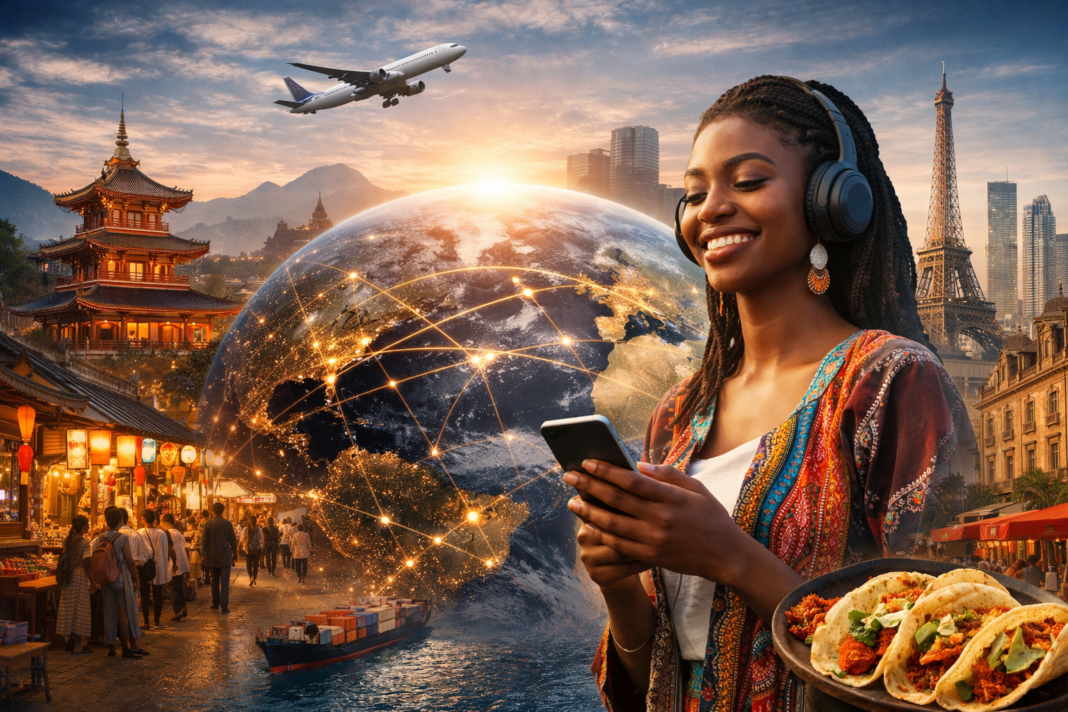

The modern world has changed due to globalization in unthinkable ways only a few decades ago. Borders have become more porous, communication is instant, and ideas travel faster than people ever could. While globalization has brought economic growth, technological advancement, and cultural exchange, it has also deeply influenced local cultures, traditions, languages, and social identities.
Understanding how globalization is transforming local cultures requires looking beyond surface-level changes. It is a complex process of adaptation, resistance, blending, and reinvention—one that affects communities differently depending on history, geography, and access to global networks.
Understanding Globalization and Culture
The term “globalization” describes how trade has made nations more interdependent, technology, migration, media, and communication. In contrast, a community’s language, customs, beliefs, food, attire, music, values, and social conventions are all part of its culture.
When these two forces interact, cultures do not simply disappear or remain unchanged. Instead, they evolve.
Cultural Exchange: A Two-Way Transformation
One of the most visible impacts of globalization is cultural exchange. Music from one region influences artists across the world. Foods once considered local specialties are now global staples. Fashion trends cross continents in days, not decades.
Local cultures are not passive recipients in this process. They actively reinterpret global influences through their own traditions, creating new hybrid forms of expression. This blending often strengthens creativity and cultural innovation rather than replacing existing identities.
The Influence of Global Media and Technology
The way that cultures are shared and consumed has changed as a result of the growth of the internet, streaming services, and social media.
Key effects include:
- Exposure to global lifestyles and values
- Shifts in language use, especially among younger generations
- Changing beauty standards, entertainment preferences, and social behaviors
While global media introduces new perspectives, it can also challenge traditional norms, leading to generational gaps within local communities.
Language and Identity in a Globalized World
Language is one of the most sensitive elements of culture affected by globalization. Global languages—particularly English—are often prioritized in education, business, and digital spaces.
This creates opportunities for global communication but can also put pressure on indigenous and minority languages. In many regions, communities are responding by:
- Reviving local languages through education and media
- Using digital platforms to document and share linguistic heritage
- Blending global and local languages into new forms of expression
Rather than disappearing, many local languages are adapting to modern contexts.
Economic Globalization and Cultural Shifts
Global markets influence how people live, work, and consume. Traditional crafts, occupations, and lifestyles may decline when global products become cheaper or more accessible.
However, globalization has also helped local cultures reach international audiences. Artisans, musicians, and cultural entrepreneurs now sell their work globally, turning tradition into sustainable livelihoods while preserving cultural identity.
Cultural Homogenization vs. Cultural Resilience
A common concern is that globalization leads to cultural homogenization—where cities, lifestyles, and values begin to look the same everywhere.
While this risk exists, reality is more nuanced. Many communities actively protect and celebrate their cultural heritage through:
- Festivals and rituals
- Cultural tourism
- Education and storytelling
- Local content creation on global platforms
Globalization often highlights cultural uniqueness rather than erasing it, especially when communities take ownership of how their culture is represented.
Youth Culture and Global Identity
Young people are at the center of cultural transformation. They grow up navigating both local traditions and global influences simultaneously.
This has led to:
- Hybrid identities that blend local values with global perspectives
- Greater openness to diversity
- New forms of activism and cultural expression
Rather than rejecting tradition, many young people redefine it in ways that feel relevant to modern life.
Challenges Faced by Local Cultures
Despite its benefits, globalization presents real challenges:
- Loss of traditional knowledge
- Commercialization of cultural symbols
- Cultural misrepresentation
- Unequal power dynamics between global and local voices
Addressing these issues requires inclusive cultural policies, community participation, and respect for cultural ownership.
The Future of Local Cultures in a Globalized World
Globalization is not a force that replaces local cultures—it reshapes them. The future lies in balance: embracing global connections while preserving cultural roots.
Local cultures that adapt, innovate, and engage with the global world on their own terms are not disappearing. They are evolving, becoming more visible, and finding new relevance in a connected world.
Final Thoughts
How globalization is transforming local cultures is not a story of loss alone—it is a story of change, resilience, and reinvention. Cultures are living systems. They grow, respond, and adapt to the world around them.
In an era of global connection, the most powerful cultures will not be those that resist change entirely, but those that evolve without losing their core identity.