
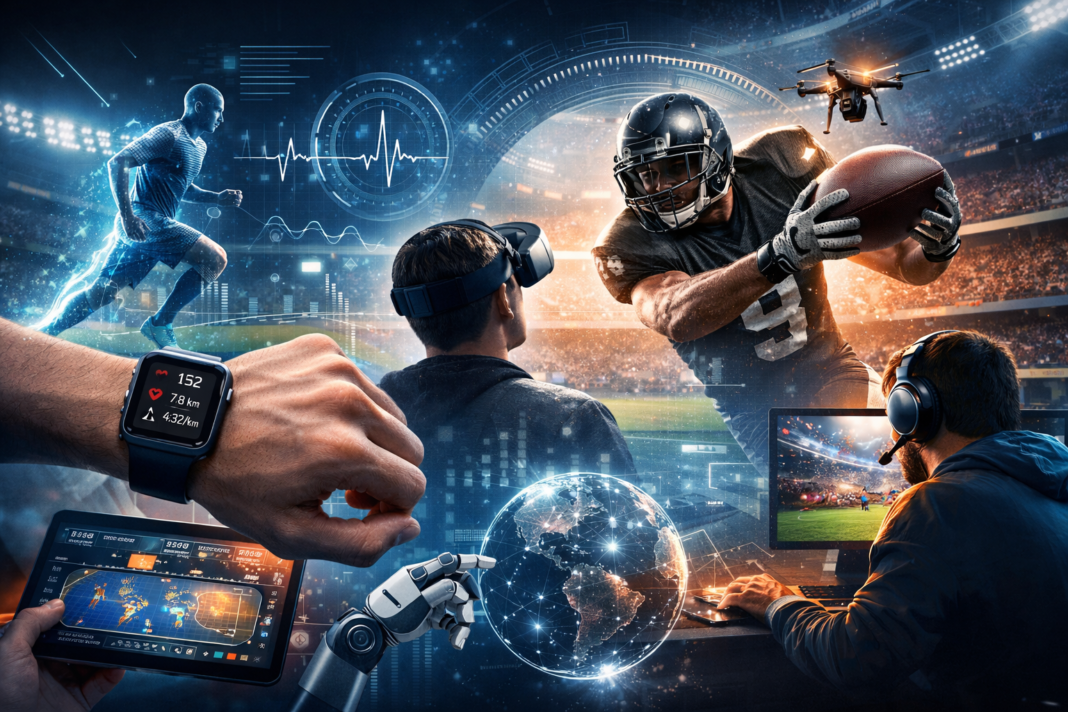

Sports have always evolved alongside innovation—from leather helmets to carbon-fiber gear, from hand-timed races to photo finishes. But today, technology isn’t just supporting sports; it’s fundamentally reshaping how games are played, coached, watched, and monetized.
From artificial intelligence and wearable sensors to immersive fan experiences and data-driven decision-making, technology is redefining the future of sports at every level—from amateur athletes to global professional leagues.
This article examines how technology will affect sports in the future, why it is important, and what lies ahead.
The Digital Transformation of Athletic Performance
Wearable Technology and Real-Time Athlete Data
One of the biggest shifts in modern sports is the rise of wearable technology. Smartwatches, GPS trackers, heart-rate monitors, and biometric sensors now provide real-time data on:
- Speed and distance covered.
- Heart rate variability
- Fatigue and recovery levels
- Muscle strain and impact force
Elite teams use this data to optimize training loads, prevent injuries, and extend athlete careers. Instead of relying solely on intuition, coaches can make evidence-based decisions tailored to each player’s physiology.
This approach has filtered down to youth and amateur sports, giving everyday athletes access to tools once reserved for professionals.
AI and Advanced Sports Analytics
Artificial intelligence has transformed sports analytics from simple statistics into predictive intelligence.
Modern AI systems can:
- Analyze thousands of game scenarios in seconds.
- Predict injury risks before they occur.
- Identify tactical weaknesses in opponents.
- Optimize lineups and in-game strategies.
In sports like basketball, soccer, and American football, AI-driven analysis now influences draft decisions, play-calling, and long-term roster planning.
The future of sports coaching is not about replacing humans—but enhancing human judgment with machine intelligence.
Injury Prevention and Sports Medicine Innovation
Smart Recovery and Rehabilitation Technology
Injury management has entered a new era. Technology now plays a critical role in:
- Accelerating recovery timelines
- Reducing re-injury risks
- Monitoring rehabilitation progress
Tools such as motion-capture systems, force plates, and AI-powered physical therapy apps allow medical teams to track subtle movement imbalances that the human eye can’t detect.
Cryotherapy, compression therapy, and neuromuscular stimulation devices are also becoming mainstream, helping athletes recover faster and perform more consistently.
Concussion Detection and Player Safety
In contact sports, safety innovation is especially critical. Smart helmets and impact sensors now measure head trauma in real time, alerting medical staff to potential concussions immediately.
This technology is helping leagues make smarter return-to-play decisions and shaping long-term rule changes designed to protect athlete health.
How Technology Is Changing the Fan Experience
Immersive Viewing Through AR and VR
The way fans experience sports has changed dramatically. Virtual reality (VR) and augmented reality (AR) are transforming passive viewing into immersive engagement.
Fans can now:
- Watch games from virtual front-row seats.
- Access real-time stats overlaid on live action.
- Experience 360-degree replays
- Participate in virtual stadium tours.
As VR hardware becomes more affordable, watching a game may soon feel like attending it in person, regardless of location.
Streaming, Social Media, and Personalization
Technology has broken down traditional broadcasting barriers. Fans expect content on demand, on any device, at any time.
Sports organizations now use:
- AI-powered recommendation engines
- Personalized highlight reels
- Interactive live streams
- Social-media-driven fan engagement
This shift has created a direct relationship between teams and fans, reducing dependence on traditional media networks.
The Rise of Smart Stadiums
Connected Venues and Seamless Experiences
Smart stadiums use IoT (Internet of Things) technology to improve every aspect of game-day experience, including:
- Mobile ticketing and cashless payments
- Crowd flow optimization
- Personalized concessions
- Real-time seat upgrades
Sensors and data analytics help stadium operators manage security, energy efficiency, and fan comfort more effectively than ever before.
Sustainability Through Technology
Technology is also helping sports venues reduce their environmental footprint. Smart energy systems, water recycling, and data-driven maintenance are turning stadiums into more sustainable, eco-friendly spaces.
This shift aligns sports with broader global sustainability goals—an increasingly important factor for modern fans.
Esports, Gaming, and the Redefinition of Competition
Esports as a Technological Sports Frontier
Esports represents one of the clearest examples of how technology is redefining sports altogether.
Competitive gaming now features:
- Professional athletes
- Global tournaments
- Massive sponsorship deals
- Millions of live viewers
Advanced streaming platforms, low-latency networks, and real-time analytics have turned esports into a legitimate global industry that rivals traditional sports in growth rate.
The Convergence of Physical and Digital Sports
Traditional sports are embracing gaming through simulations, digital twins, and hybrid competitions. Athletes use virtual environments to rehearse plays, simulate opponents, and refine techniques without the physical wear and tear of practice.
This convergence suggests a future where physical and digital competition coexist, enhancing each other rather than competing.
Technology’s Impact on Coaching and Talent Development
Data-Driven Scouting and Recruitment
Scouting has gone far beyond highlight tapes. AI-powered platforms now analyze performance data from thousands of athletes worldwide, uncovering hidden talent regardless of geography.
This has:
- Increased diversity in professional sports
- Reduced scouting bias
- Expanded opportunities for underrepresented athletes
Technology is making sports more merit-based and globally inclusive.
Virtual Coaching and Remote Training
Online coaching platforms, motion-analysis apps, and AI trainers allow athletes to receive expert guidance from anywhere in the world.
This democratization of coaching is reshaping talent development, especially in regions with limited access to elite training facilities.
Ethical Challenges and the Human Element
While technology offers enormous benefits, it also raises important questions:
- How much data collection is too much?
- Who owns athlete performance data?
- Can over-reliance on analytics reduce creativity and instinct?
The future of sports depends on maintaining a balance—using technology as a tool, not a replacement for human passion, intuition, and competition.
What the Future of Sports Technology Looks Like
Looking ahead, we can expect:
- More AI-assisted officiating
- Fully immersive fan experiences
- Personalized training powered by genetic insights
- Deeper integration of blockchain for ticketing and contracts
- Greater emphasis on athlete mental health technology
The sports industry will continue to evolve, but one thing is clear: technology will be at its center.
Final Thoughts: A New Era of Sports Innovation
So, how is technology changing the future of sports?
It’s making athletes smarter and safer, fans more connected, competitions more global, and decisions more precise. Yet, at its core, sports remain about human effort, emotion, and excellence.
The most successful teams, leagues, and athletes of the future won’t be those who resist technology—but those who integrate it thoughtfully while preserving the spirit of the game.
As innovation accelerates, sports aren’t losing their soul—they’re simply entering their most intelligent era yet.